
Market Overview: Asian Stocks Close Week With Mixed Results as Iran War Grinds On
Asian stock markets ended the week on a cautious note on Friday, March 27, 2026, as the U.S.-Iran conflict entered its fifth week with no near-term resolution in sight. Markets see-sawed throughout the day — Seoul’s KOSPI opened with a dramatic 3.74% plunge before staging a remarkable intraday recovery, ultimately closing down just 0.4%. Tokyo’s Nikkei slipped modestly while Hong Kong extended its multi-session rebound. Trump’s 10-day extension of the pause on strikes against Iranian energy facilities provided some relief, though Tehran dismissed the U.S. peace proposal as “one-sided and unfair.”
Japan’s finance minister signaled that “bold steps” may be needed to support the weakening yen, while South Korea announced a massive $3.3 billion emergency bond buyback to stabilize its financial markets.
Major Asian Index Performance — March 27, 2026
| Index | Close | Change | % Change |
|---|---|---|---|
| 🇰🇷 KOSPI | 5,438.87 | −21.59 | −0.40% |
| 🇯🇵 Nikkei 225 | 53,373.07 | −230.58 | −0.43% |
| 🇭🇰 Hang Seng | 24,951.88 | +95.45 | +0.38% |
| 🇨🇳 Shanghai Composite | 3,913.72 | +24.64 | +0.63% |
| 🇦🇺 ASX 200 | 8,516.30 | −9.40 | −0.11% |
Source: Nikkei Asia, Yonhap
South Korea: KOSPI Stages Dramatic Intraday Recovery After Opening Crash
South Korea’s KOSPI delivered the day’s most dramatic price action. After opening 2.93% lower on renewed Middle East fears — plunging as much as 204 points (−3.74%) to 5,256.46 in the first 20 minutes of trading — the benchmark staged a powerful intraday recovery to close at 5,438.87, down only 0.40%, according to Yonhap.
The overnight sell-off on Wall Street, where the Nasdaq officially entered correction territory, initially triggered heavy selling in Seoul. However, bargain-hunting by domestic retail investors helped pare losses throughout the session.
Foreign Exodus Deepens
Foreign investors continued their persistent selling spree, with ownership in Samsung Electronics dropping to a 12-and-a-half-year low, according to Yonhap. Total net foreign selling in the broader stock market reached ₩30.3 trillion over recent weeks, reflecting deep unease over South Korea’s vulnerability as a major energy importer.
Won Extends Losing Streak
The Korean won weakened further to 1,508.9 per dollar, down 1.9 won from the previous session, extending its losing streak to three straight sessions. The won has hovered around the psychologically significant 1,500-won mark in recent sessions and had plunged to as low as 1,517.3 won on Monday — its lowest level in 17 years.
Emergency Bond Buyback

South Korea will conduct an emergency buyback of 5 trillion won ($3.3 billion) in sovereign bonds, the government announced Thursday, in a move that aims to curb yields that have surged during the Iran war. It would be the country’s first emergency bond buyback since 2021, underscoring the severity of the financial market stress.
This comes on top of Seoul’s sweeping $17 billion “wartime” budget announced earlier this week, as the government scrambles to cushion the economy from the oil shock.
Japan: Stocks Slip as Finance Minister Signals “Bold Steps” for Yen
Japan’s Nikkei 225 declined on Friday, capping its worst weekly performance in the current crisis. Tokyo and Seoul markets both slipped as the Iran conflict continues to dampen sentiment, according to Nikkei Asia’s Jada Nagumo, as investors mulled the impact of a war that has been ongoing for four weeks with no near-term resolution in sight.
Japan’s finance minister said “bold steps” may be needed to support the yen, which has been battered by surging energy import costs. The yen has been trading near multi-decade lows, weighed down as Japan — which depends heavily on Middle Eastern oil — grapples with a dual crisis of energy security and currency depreciation.
Strategic Oil Reserves Under Stress
Japan’s strategic petroleum reserves face their biggest stress test in years, with gasoline subsidies driving demand amid growing concerns about energy supplies. The Strait of Hormuz shutdown is also raising risks to Japan’s aluminum supply, as Japanese manufacturers scramble for alternatives to Middle Eastern ingots.
China & Hong Kong: Relative Resilience Amid Global Turmoil
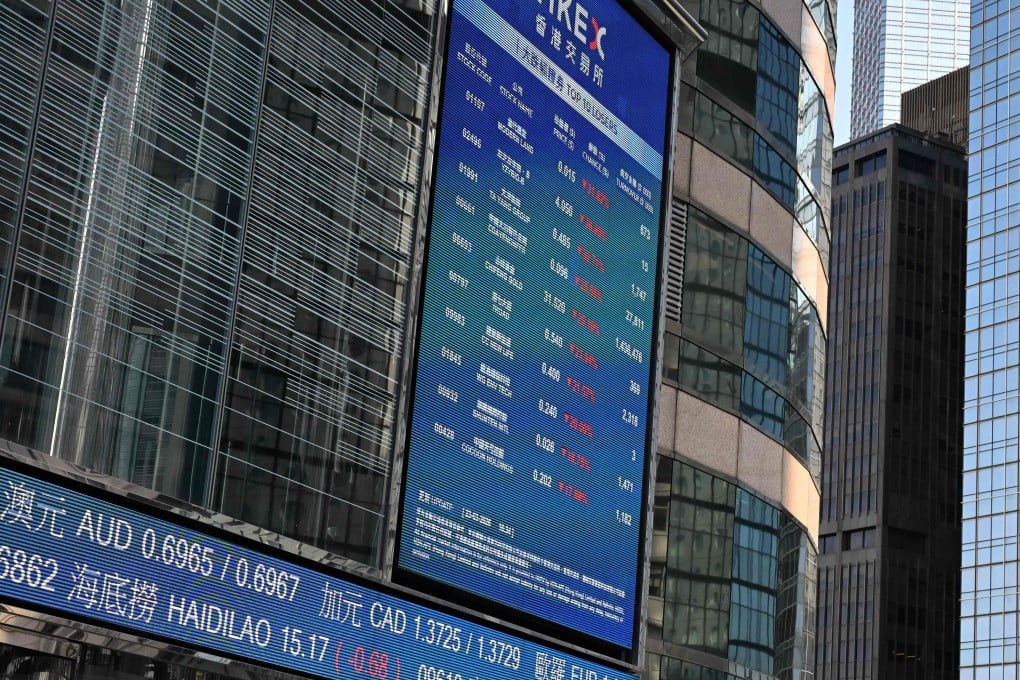
Chinese and Hong Kong markets have shown relative resilience this week compared to their Asian peers. The Hang Seng Index extended its rebound earlier in the week on signs that a diplomatic solution to Middle East tensions was making progress, with the HSI rising 1.1% on Tuesday and adding to a 2.7% gain a day earlier.
“Markets rarely wait for a conflict to formally end before they begin to stabilise,” said Charu Chanana, chief investment strategist at Saxo Markets. “If investors start to see even a modest reduction in escalation risk, some of the areas hit hardest by the oil shock, stagflation fears, and risk aversion may begin to find support.” (SCMP)
Global investors are increasingly pivoting to the “stability” of China amid turmoil, according to speakers at the Milken Institute’s Global Investors’ Symposium in Hong Kong. “I think we should seriously think about China, because of its stability [in this geopolitical turmoil], and I do see ‘animal spirits’ coming back,” said Hoi Tung, CEO of Ping An Overseas Holdings.
However, memory-chip stocks took a hit after Google’s TurboQuant AI advance raised concerns about reduced demand for high-bandwidth memory, though analysts told investors to “buy the dip.” Meanwhile, Tong Ren Tang’s healthcare unit pulled its Hong Kong IPO, the first postponement this year, amid tepid demand.
Key Regional Developments
Australia: Rare-Earth Stocks Soar on China Export Curbs

In a notable bright spot, Australian rare-earth stocks have risen sharply amid growing demand for metals sourced outside of China. Lynas, the world’s largest commercial separator of rare earths outside China, has seen its market cap triple in a year, buoyed by deals with Japan and the U.S.
Singapore Expands Gold Hub Ambitions
Singapore is tapping JPMorgan and UBS to drive its gold hub ambitions, with the Monetary Authority of Singapore looking to provide gold vaulting services for foreign central banks. The city-state also debuted a gold ETF earlier this week amid the Iran war-driven precious metal volatility.
Iran Conflict: Trump Extends Energy Strike Pause

U.S. President Donald Trump on Thursday extended a pause on strikes against Iranian energy facilities by 10 days, through April 6, saying talks with Tehran are “going very well.” However, Tehran dismissed the U.S. proposal as “one-sided and unfair,” while asserting that it has “a natural and legal right” to control the Strait of Hormuz, according to Yonhap.
Currencies
| Pair | Rate | Change |
|---|---|---|
| USD/KRW | 1,508.9 | +1.9 (↑) |
| USD/JPY | 159.82 | +0.02 (+0.01%) |
Source: Yonhap, Nikkei Asia
Weekly Summary
The week ending March 27 was dominated by the push-and-pull of Iran diplomacy. Key weekly highlights:
- KOSPI fell 6% for the week — the steepest weekly decline since the initial outbreak of the Iran conflict (Nikkei Asia)
- South Korea rolled out $17bn “wartime” budget and a $3.3bn emergency bond buyback to stabilize markets (Nikkei Asia)
- Japan’s strategic oil reserves face their biggest stress test in years (Nikkei Asia)
- Global investors are pivoting to China as a relative safe haven amid the turmoil (SCMP)
- Google’s TurboQuant rattled memory-chip stocks, adding pressure on Samsung and SK hynix (SCMP)
- Foreign ownership in Samsung dropped to a 12½-year low amid the broad sell-off (Yonhap)
Market Outlook
Asian markets face continued uncertainty heading into next week. Key factors to watch:
- Iran talks deadline (April 6) — Trump’s extended pause on energy strikes gives negotiations a narrow window. Iran’s response will be critical for oil prices and market sentiment.
- Japan’s yen intervention — The finance minister’s “bold steps” language is the strongest signal yet that Tokyo may intervene to support the currency.
- South Korea’s bond buyback execution — The ₩5 trillion buyback, the first since 2021, will test whether Seoul’s policy toolkit can contain yield volatility.
- Semiconductor sector recalibration — Google’s TurboQuant and ongoing foreign selling in Samsung and SK hynix may continue to pressure tech-heavy indices.
- China as relative safe haven — If global capital continues flowing toward Chinese assets, the divergence between China/Hong Kong and the rest of Asia could widen.
With the Strait of Hormuz effectively closed and oil prices elevated, energy-dependent economies like South Korea and Japan remain the most vulnerable. The war in the Middle East exposes the vulnerability of Asia’s export-driven economies, and investors should brace for continued volatility.
Disclaimer: This article is for informational purposes only and does not constitute financial advice. Market data may be delayed. Always consult a qualified financial advisor before making investment decisions.
📊 For real-time market data, in-depth economic indicators, and global financial analysis, visit ECONPLEX
🌐 www.econplex.com — Your Global Economic Intelligence Hub