Market Overview
Asian equities staged a broad rally on Tuesday, March 25, as crude oil prices tumbled below $100 a barrel on growing hopes that a diplomatic resolution to the Iran conflict was within reach. South Korea’s Kospi opened with a stunning 3 % surge before paring gains, while Japan’s Nikkei 225 posted the region’s strongest advance. Despite the optimism, heavy foreign selling in Seoul and a still-weakening Korean won tempered enthusiasm.

Currency dealers at the Hana Bank dealing room in Seoul. (Yonhap)
South Korea — Kospi Opens +3 % but Settles at +1.59 %
The benchmark Kospi surged 170.22 points, or 3.06 %, at the open to 5,724.14 — buoyed by easing Middle East tensions and a sharp drop in global oil prices. However, the index steadily retreated through the session as foreign investors turned aggressive sellers, ultimately closing up 88.29 points (+1.59 %) at 5,642.21, according to Yonhap.
The tech-heavy Kosdaq outperformed, jumping 3.40 % to 1,159.55, as investors piled into smaller-cap technology and biotech names.
Individual Movers
- Samsung Electronics opened 3.27 % higher but gave back most of its gains by the close as foreign funds locked in profits.
- SK hynix surged 4.26 % at the open after announcing plans to pursue an American Depositary Receipt (ADR) listing on the U.S. stock market — a landmark move that would make it the first major Korean chipmaker available directly to American investors.
- Hyundai Motor gained 4.27 % at the open, while Hanwha Aerospace added 1.5 % and Naver rose 1.87 %.
Foreign Selling & Won Weakness
Foreign investors were net sellers of 1.29 trillion won worth of Korean stocks, capping the day’s rally. The Korean won also weakened, closing at 1,499.7 per U.S. dollar — down 4.5 won from the previous session — despite having opened stronger at 1,491.9. The won erased early gains as the dollar strengthened and geopolitical uncertainty lingered, Yonhap reported.
Policy Response
South Korea’s Cheong Wa Dae and the Prime Minister’s office announced plans to launch emergency economic teams to oversee the country’s response to the ongoing Middle East crisis. Separately, GM confirmed a $600 million investment in its South Korean operations, providing a boost to the country’s auto sector.
Japan — Nikkei Leads the Region with +2.87 %
Japan’s Nikkei 225 jumped 1,498.67 points (+2.87 %) to 53,749.61, posting the biggest percentage gain among major Asian indices. The broader Topix rose 2.57 % to 3,650.99, as export-oriented manufacturers and financials led the advance, according to CNBC.
The rally was fueled by easing crude oil prices — a major relief for resource-importing Japan — combined with overnight signals from the Trump administration that suggested progress on an Iran peace framework.
Greater China — Hang Seng +1.09 %, CSI 300 +1.4 %
Hong Kong’s Hang Seng Index extended its rebound for a second session, gaining 1.09 %. The Hang Seng Tech Index rose 1.4 %, with Li Auto (+4.5 %) and Alibaba (+1.1 %) among the gainers, per the South China Morning Post.
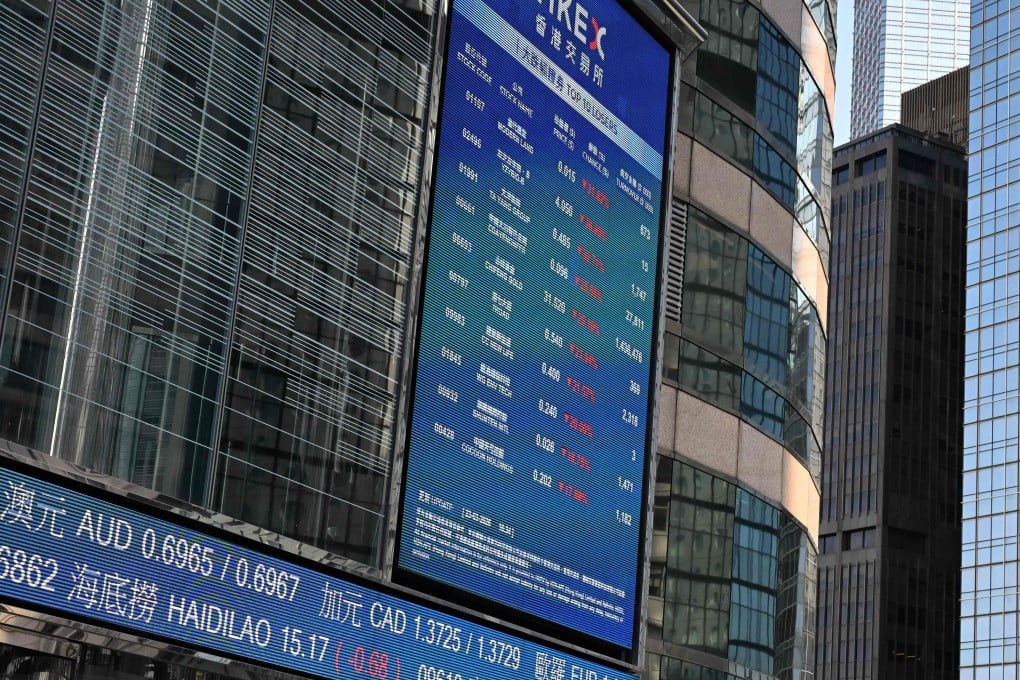
Stock prices displayed at the Hong Kong Exchanges and Clearing building. (AFP via SCMP)
Among notable movers, bottled water giant Nongfu Spring rallied 8 %, while gold miner Zijin Mining added 4.2 %. Lidar sensor maker Hesai Group dropped 9.4 % after Deutsche Bank slashed its 2026 profit forecast by 40 %.
On the mainland, the CSI 300 climbed 1.4 % to 4,537.47, and the Shanghai Composite advanced 0.7 %, lifted by consumer and technology names.
Australia — ASX 200 +1.85 %
Australia’s S&P/ASX 200 rose 1.85 % to 8,534.3, led by energy and mining stocks that rallied on hopes that easing Middle East tensions would stabilize commodity supply chains, per CNBC.
Oil Prices Tumble Below $100
Crude oil prices fell sharply as diplomatic progress on the Iran crisis reduced the geopolitical risk premium:
- Brent crude dropped roughly 6 % to ~$98.31, falling below the $100 mark for the first time since the recent escalation.
- WTI crude declined about 5 % to ~$87.65.
The sell-off was triggered by U.S. President Donald Trump’s statement that Iran had offered a “very significant prize” related to oil and gas, which markets interpreted as a signal that Strait of Hormuz shipping flows could normalize. U.S. and regional mediators were reportedly discussing the possibility of high-level peace talks as soon as Thursday, pending a response from Tehran, according to CNBC.
Qatar LNG Force Majeure
Adding to energy-market volatility, Qatari energy firm QatarEnergy declared force majeure on LNG contracts with South Korea, China, Italy, and Belgium — citing disruptions stemming from the Middle East conflict. The declaration underscores the fragility of global energy supply chains even as oil prices retreat, Yonhap reported.
What to Watch
- Iran peace talks: Axios reported that high-level U.S.–Iran talks could occur as early as Thursday — any confirmation or breakdown would be the primary driver for oil and equities.
- SK hynix ADR listing: Details on the timeline and structure of SK hynix’s planned U.S. listing could reshape capital flows into Korean tech.
- Foreign fund flows: The 1.29 trillion won sell-off in Seoul despite a rallying market signals continued caution among global investors — watch for follow-through selling.
- Central bank signals: With oil retreating from $104 highs, markets will parse whether the ECB and other central banks soften their recent hawkish pivot.