Asian Markets Reel as Iran Ground War Fears Spike Oil Past $116; Nikkei Enters Correction, KOSPI Plunges 3% (March 30, 2026)
Asian equities suffered a brutal Monday selloff on March 30 as weekend military escalation in the Middle East — including Houthi rebel attacks directly on Israel, intensified Israeli strikes on Tehran, and reports of possible U.S. ground operations against Iran — sent shockwaves across the region. Brent crude surged 3.7% to $116.80 per barrel, its highest in more than a week, while the Japanese yen weakened past 160 per dollar. Japan’s Nikkei 225 entered correction territory, South Korea’s KOSPI plunged 3%, and India’s Sensex shed more than 2%.

Japan’s Nikkei Stock Average closed down 2.8% at 51,885.85 on Monday, entering correction territory. Photo: Akitoshi Sugiura via Nikkei Asia
Asian Market Performance — March 30, 2026
Sources: Nikkei Asia, SCMP, Investing.com
Japan: Nikkei Enters Correction Territory
Japan’s Nikkei 225 fell 2.8% to 51,885.85, officially entering correction territory — defined as a decline of more than 10% from its recent high. The selloff was driven by growing concerns over a protracted U.S.-Israel war with Iran, with weekend reports suggesting that Washington may be preparing ground operations against Tehran.
Adding to the pressure, the Japanese yen plunged past 160 per dollar for the first time in 20 months on Friday, as soaring oil prices and the resulting capital outflows hammered the energy-import-dependent currency. Japan’s top currency diplomat signaled that Tokyo is ready to take “decisive steps” if speculative movements against the yen persist, raising the prospect of a direct foreign-exchange intervention.
Meanwhile, the Bank of Japan is reportedly rushing to pave the way for rate hikes amid rising oil prices and the weakening yen. Analysts see a 70% probability the BOJ will raise rates at its April meeting — a dramatic shift in monetary policy expectations driven by the energy crisis.
Sources: Nikkei Asia (Market Plunge), Nikkei Asia (Yen at 160), Nikkei Asia (FX Intervention), Nikkei Asia (BOJ Rate Hike)
South Korea: KOSPI Plunges 3% as Seoul Moves to Stabilize Bonds
South Korea’s KOSPI nosedived 3% to approximately 5,277, its steepest single-day loss in weeks, as tech-heavy Korean equities bore the brunt of risk-off sentiment. The index has now fallen for four consecutive trading days since March 26, reflecting deep anxiety over the impact of surging oil prices on Korea’s export-oriented economy.
In response to market turmoil, the South Korean government announced plans to buy back $3 billion in government bonds to help stabilize the fixed-income market. The intervention underscores Seoul’s growing concern about capital outflows and the economic fallout from the Strait of Hormuz disruption — South Korea imports the vast majority of its energy from the Middle East, making it particularly vulnerable to the current crisis.
Sources: Nikkei Asia, Nikkei Asia (Korea Bond Buyback)
China & Hong Kong: Relative Resilience Amid Aluminium Surge
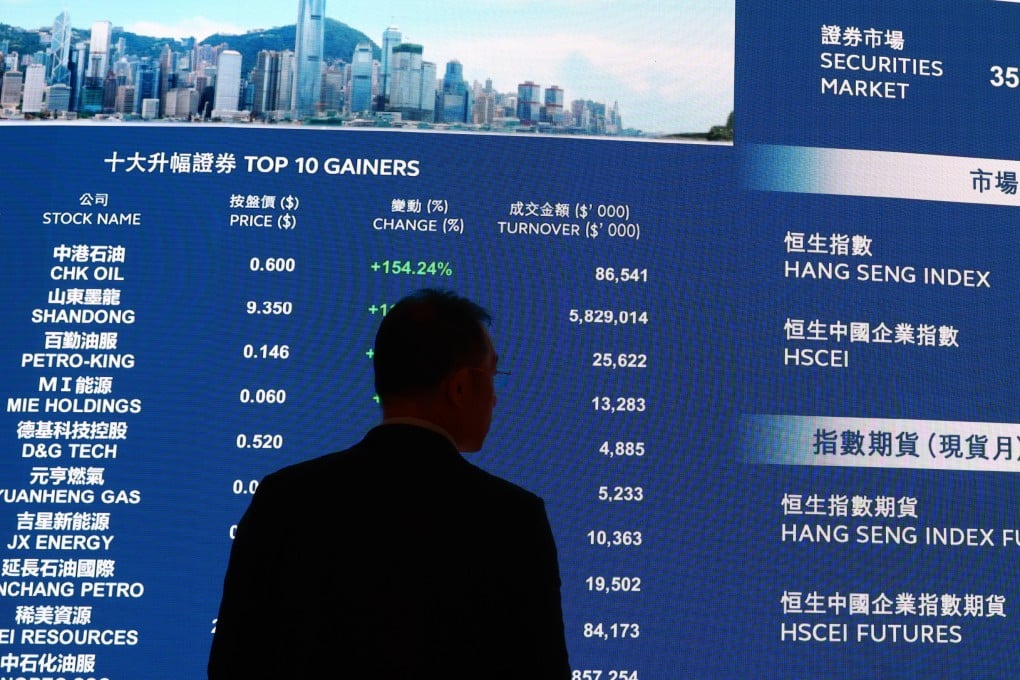
Hang Seng Index fell 0.8% to 24,750.79 on Monday. Photo: Dickson Lee via SCMP
Chinese and Hong Kong equities showed notable relative resilience compared to their regional peers. The Hang Seng Index dipped 0.8% to 24,750.79, while the Hang Seng Tech Index lost 1.8%. The Shanghai Composite actually eked out a 0.2% gain, though the CSI 300 slipped 0.2%.
A major story within the session was Iran’s strikes on Middle Eastern aluminium plants over the weekend, which sent shockwaves through the global metals market and drove sharp rallies in Hong Kong-listed aluminium producers:
On the downside, exporters and consumer-facing companies were punished as fears of sustained high oil prices weighed on global demand expectations:
- Shenzhou International (garments) — plunged 8.1% to HK$48.04, the session’s worst decliner
- Haier Smart Home — dropped 5.4% to HK$20.70
- BYD Electronic — fell 4.8% to HK$29.12
Edith Qian, an analyst at CGS International, noted that “Chinese equities have shown relative resilience” because “the Middle East accounts for only about 6% of China’s total energy consumption” and Beijing has implemented “pre-emptive measures by restricting exports of refined oil and fertilisers.”
Lorraine Tan at Morningstar attributed the aluminium producers’ gains directly to the Iranian strikes on smelting facilities, calling it a “supply shock” that could persist for months even if the conflict de-escalates.
Sources: SCMP, CNBC (Aluminium Shockwaves)
India Sinks, Southeast Asia Sheds Over $200 Billion
India’s markets were hit hard, with the BSE Sensex plunging 2.2% to 71,947.55 (down 1,635 points) and the Nifty 50 losing 2.1% to 22,331.40. India, which imports roughly 85% of its crude oil, is among the most vulnerable major Asian economies to sustained oil price increases.
Across Southeast Asia, the damage was even more severe on a cumulative basis. According to Nikkei Asia, Southeast Asian companies have shed over $200 billion in market value since the Iran war began, with export-oriented manufacturers, airlines, and logistics firms bearing the heaviest losses. Taiwan’s TAIEX fell 1.8% to 32,518, weighed down by tech sector weakness and energy concerns.
Australia’s S&P/ASX 200 slipped 0.7%, with losses in the broader market partially offset by surging energy and coal stocks. Australian coal shares surged as the Iran war deepened the global energy crisis, with investors piling into alternatives to Middle Eastern oil and gas.
Sources: Investing.com, Nikkei Asia (SE Asia $200bn Loss), Nikkei Asia (Coal Surge)
Oil Surges Past $116 as Weekend Escalation Deepens
Brent crude jumped 3.7% to $116.80 per barrel, its highest in more than a week, while WTI rose above $101 per barrel — well above the psychologically critical $100 mark. The weekend saw a significant escalation in hostilities:
- Houthi rebels launched their first direct attacks on Israeli targets over the weekend
- Israel intensified airstrikes on Tehran in response
- The U.S. deployed additional military forces to the region
- Reports emerged of Pentagon planning for possible ground operations against Iran
- Iran struck Middle Eastern aluminium smelting plants, threatening global supply chains
Asia is uniquely exposed: the region receives 80–85% of oil and LNG passing through the Strait of Hormuz, according to Lazard Geopolitical Advisory. The continued closure of the strait — now in its second month — has severely disrupted Persian Gulf oil supplies and forced nations across the region to scramble for alternative energy sources.
Sources: SCMP, Nikkei Asia
Currency Pressures Intensify Across the Region

Japan’s dependency on imported energy is weighing heavily on the yen. Photo: Shinya Sawai via Nikkei Asia
The energy crisis unleashed by the Iran conflict is hammering currencies across Asia. The Japanese yen weakened past 160 per dollar for the first time since July 2024, with Japan’s massive energy import bill driving relentless capital outflows. Tokyo’s top currency diplomat warned the government would take “decisive steps” if speculation persists — widely seen as a precursor to outright intervention.
India’s Reserve Bank of India (RBI) imposed a $100 million cap on onshore open positions to curb speculative pressure on the rupee, providing brief respite. Across the region, currencies of Asian economies most reliant on Middle Eastern energy continued to weaken against the U.S. dollar.
Sources: Nikkei Asia (Yen), Nikkei Asia (Intervention)
Analyst Outlook: Where Do Markets Go from Here?
Kenny Ng at Everbright Securities warned that “the market is anxious that sustained high oil prices will deliver a significant shock to both the future economy and investment markets.”
Raymond Cheng at Standard Chartered offered a more probabilistic view, assigning a 70% probability that oil prices will peak within the next 3–4 weeks. Under this scenario, the Hang Seng could recover to 29,000. However, if oil continues to climb, the HSI could retreat to 21,500 — a further decline of roughly 13% from Monday’s close.
PetroChina, for its part, sought to reassure investors by announcing a $32 billion development drive, downplaying the impact of the Iran conflict on its operations. However, the Hang Seng has already fallen 12% from its late-January high of 28,056, and the Nikkei 225’s entry into correction territory underlines the depth of risk repricing across the region.
In a rare positive signal, Malaysia’s Prime Minister Anwar Ibrahim confirmed that Iran is allowing Malaysian vessels through the Strait of Hormuz — a development that may hint at selective diplomatic pathways even as the broader conflict intensifies.
Sources: SCMP, Nikkei Asia
Disclaimer: This article is for informational purposes only and does not constitute investment advice. All data is sourced from publicly available reports. Market conditions are subject to rapid change — always do your own research before making investment decisions.
📊 Real-time economic indicators & market analysis
Stay ahead with ECONPLEX — your comprehensive economic intelligence platform