Market Overview: Ceasefire Optimism Fades, Asia Turns Red
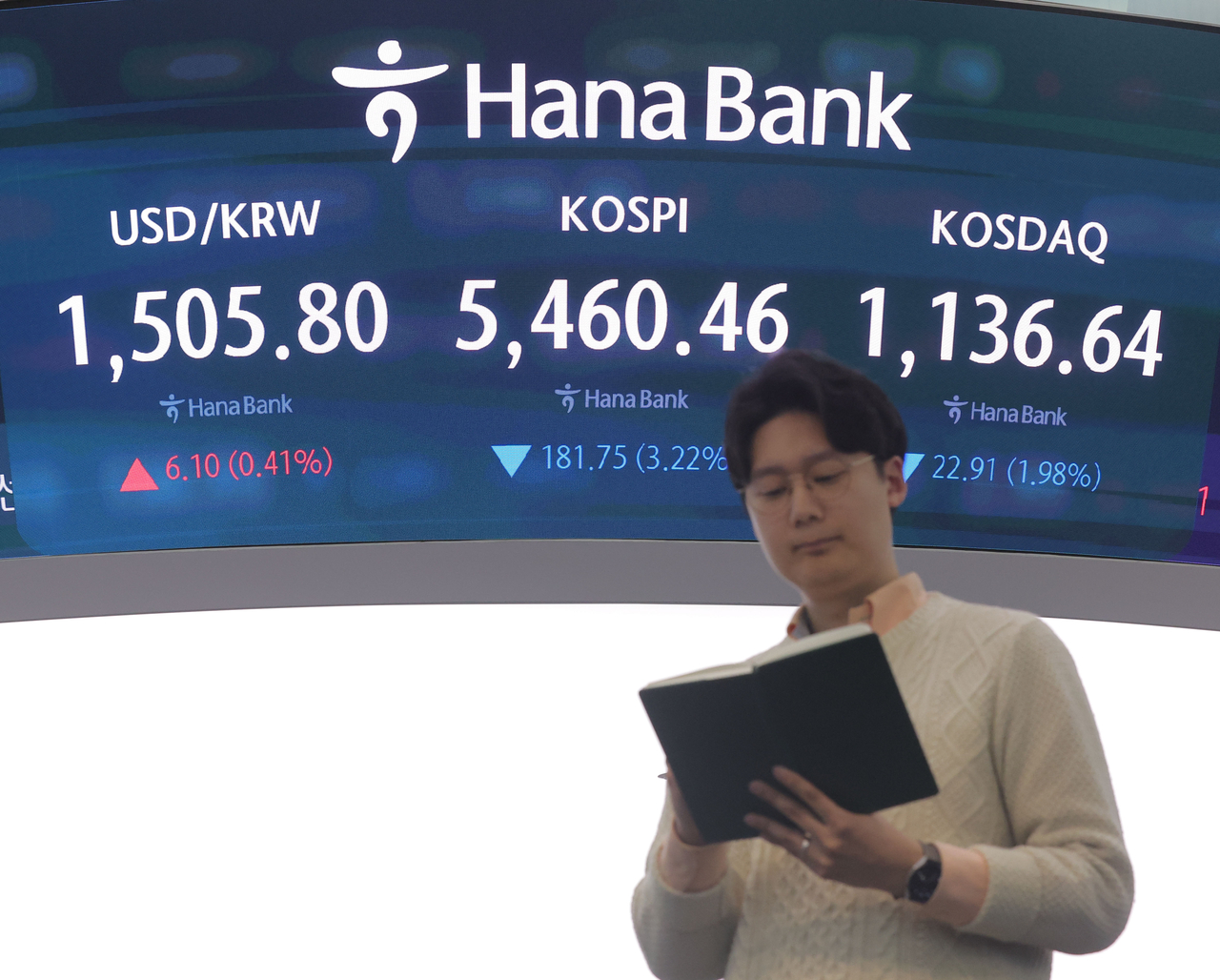
Asian stock markets sold off broadly on Thursday, March 26, 2026, as the previous day’s ceasefire optimism evaporated. Iran said it is reviewing a U.S. proposal but has no intention of holding direct talks, while President Trump threatened to hit Iran harder if Tehran fails to accept defeat. The diverging signals sent investors scrambling for the exits across the region.
South Korea’s KOSPI was the day’s biggest loser, plummeting 3.22%, while Hong Kong’s Hang Seng fell nearly 2%, and mainland China indices shed more than 1%. Japan’s Nikkei 225 held up relatively well, declining only 0.48%. Oil prices resumed their climb, with Brent crude rising above $104 per barrel.
Major Asian Index Performance — March 26, 2026
| Index | Close | Change | % Change |
|---|---|---|---|
| 🇰🇷 KOSPI | 5,460.46 | −181.75 | −3.22% |
| 🇰🇷 KOSDAQ | 1,136.64 | −22.91 | −1.98% |
| 🇭🇰 Hang Seng | 24,856.43 | −479.52 | −1.89% |
| 🇭🇰 Hang Seng CEI | 8,389.93 | −192.81 | −2.25% |
| 🇨🇳 Shanghai Composite | 3,889.08 | −42.75 | −1.09% |
| 🇨🇳 SZSE Component | 13,606.44 | −194.56 | −1.41% |
| 🇯🇵 Nikkei 225 | 53,489.00 | −260.62 | −0.48% |
| 🇯🇵 TOPIX | 3,642.80 | −8.19 | −0.22% |
| 🇹🇼 TAIEX | 33,337.62 | −101.49 | −0.30% |
| 🇦🇺 ASX 200 | 8,525.70 | −8.60 | −0.10% |
| 🇮🇳 BSE Sensex* | 75,273.45 | +1,205.00 | +1.63% |
| 🇮🇳 Nifty 50* | 23,309.00 | +396.60 | +1.73% |
* India data reflects March 25 closing (Holi holiday). Source: Investing.com, CNBC Asia Markets
Southeast Asian Markets
| Index | Close | Change | % Change |
|---|---|---|---|
| 🇮🇩 IDX Composite | 7,174.78 | −127.34 | −1.74% |
| 🇵🇭 PSEi Composite | 5,984.20 | −59.97 | −0.99% |
| 🇻🇳 VN-Index | 1,644.20 | −13.99 | −0.84% |
| 🇹🇭 SET Index | 1,446.37 | −11.54 | −0.79% |
| 🇲🇾 KLCI | 1,713.27 | −3.41 | −0.20% |
| 🇸🇬 STI | 4,901.58 | −2.96 | −0.06% |
Source: Investing.com
South Korea: KOSPI Plunges Over 3% as Semiconductors Rout
The KOSPI posted the heaviest losses in Asia, tumbling 181.75 points (−3.22%) to 5,460.46, as two headwinds converged: persistent uncertainty over U.S.-Iran peace talks and a fresh blow to the semiconductor sector, according to The Korea Herald and Yonhap.
“Uncertainties over the Middle East situation and the semiconductor market weighed on the market,” said Lee Kyoung-min, an analyst at Daishin Securities.
Semiconductor Sell-Off: Google’s TurboQuant Stokes Memory Fears
Semiconductors led the market decline after Google unveiled its new AI compression algorithm, TurboQuant, fueling concerns that demand for memory chips may decrease in the near future. The technology allows AI models to run with significantly less memory, raising existential questions about future HBM and DRAM procurement volumes.
- Samsung Electronics: −4.71% to ₩180,100
- SK hynix: −6.23% to ₩933,000
Foreign Selling Binge Continues
Foreign investors dumped a net ₩3.1 trillion ($2.05 billion), extending their persistent selling streak. Institutional investors also sold ₩338.7 billion net. Retail investors stepped in as buyers, purchasing a net ₩3.06 trillion.
Total trade volume was moderate at 902.9 million shares worth ₩24.1 trillion ($15.9 billion). Losers outnumbered winners 662 to 226.
Bright Spots: Financials and Select Chemicals
- KB Financial +1.87% to ₩152,200 — shareholders approved a ₩7.5 trillion capital reserve reduction to enable tax-free payouts
- Shinhan Holdings +1.41% to ₩93,400 — CEO secured second term
- Lotte Chemical +0.88% to ₩80,500 — Iran’s envoy said Korean vessels could pass through Hormuz under prior coordination
The Korean won weakened to 1,507 per U.S. dollar, down 7.3 won from the previous session, hitting 17-year lows against the greenback amid persistent Middle East volatility.
Japan: Nikkei Slips 0.48% as PM Seeks IEA Oil Release
The Nikkei 225 closed down 260.62 points (−0.48%) at 53,489.00, while the TOPIX shed 8.19 points (−0.22%) to 3,642.80. Japanese markets showed relative resilience compared to their regional peers, though investors remained cautious.
Japanese Prime Minister Sanae Takaichi asked IEA chief Fatih Birol for an additional coordinated release of oil stockpiles during talks on Wednesday, as Tokyo seeks to hedge against a prolonged Middle East conflict. In a highly unusual move, Japan is shifting focus to oil in an unorthodox scramble to talk up the yen, linking currency intervention strategy to energy security.
The yen continued to trade near multi-decade lows at 159.49 per dollar, weighed by elevated energy import costs.
China & Hong Kong: Hang Seng Sinks Nearly 2%; Tech-Heavy CEI Drops 2.25%
Hong Kong’s Hang Seng Index fell 479.52 points (−1.89%) to 24,856.43, while the Hang Seng China Enterprises Index (CEI) dropped 2.25% to 8,389.93. The FTSE China 50 lost 2.41% as large-cap mainland-listed firms led the decline.
In mainland China, the Shanghai Composite fell 1.09% to 3,889.08 and the Shenzhen Component lost 1.41% to 13,606.44. The CSI 1000 small-cap index dropped 1.44%, indicating broad-based selling pressure.
China’s markets were hit by a combination of geopolitical uncertainty and energy supply concerns. While Beijing has been diversifying away from Middle East LNG through increased domestic gas production and Russian pipeline imports, the broader risk-off sentiment dragged Chinese equities lower.
Energy Crisis: Oil Resumes Climb, LNG Markets in Turmoil

Oil clawed back losses from the previous session as ceasefire hopes faded. As of early Thursday trading, per Reuters:
| Commodity | Price | Change |
|---|---|---|
| Brent Crude | $104.30 | +$2.08 (+2.03%) |
| WTI Crude | $92.25 | +$1.93 (+2.14%) |
| Asia LNG (Spot) | $25.30/mmBtu | +143% since Feb 28 |
The global LNG market is in deep crisis. According to Reuters, damage to Qatar’s export infrastructure has sidelined 12.8 million tons per year of LNG capacity for three to five years. Iran’s blocking of the Strait of Hormuz, which handles 20% of global LNG flows, has prompted analysts to cut global supply outlooks by as much as 35 million tons — equivalent to roughly 500 LNG cargoes.
Asia LNG spot prices have jumped 143% since the war began on February 28, reaching a three-year high of $25.30/mmBtu. Price-sensitive buyers in South and Southeast Asia are experiencing demand destruction, with Pakistan rationing energy through a four-day work week, and industrial production cuts hitting India’s petrochemical and ceramics sectors.
“Optimism regarding a ceasefire has faded,” said Tsuyoshi Ueno, senior economist at NLI Research Institute, adding that Washington’s bar appeared high, leaving oil prices vulnerable to further volatility.
Additional supply-side headwinds include at least 40% of Russia’s oil export capacity being halted following Ukrainian attacks and tanker seizures, while Iraqi oil production has slumped as storage fills up.
South Korea Declares “Economic Wartime” Emergency Measures
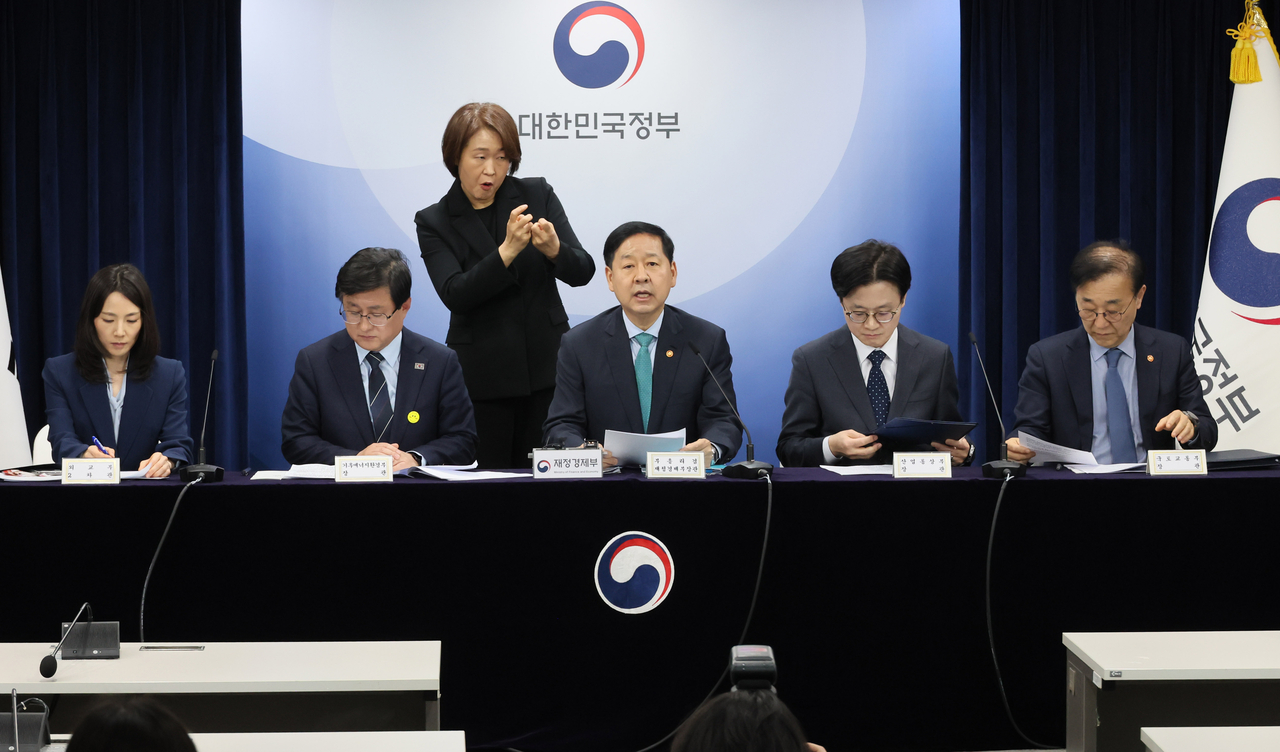
In a sweeping policy response, Seoul unveiled a three-phase “Emergency Economic Response Measures to the Middle East War”, per The Korea Herald and Yonhap:
- Naphtha export controls take effect Friday — South Korea imports roughly half its naphtha through the Strait of Hormuz
- Urea / urea solution hoarding ban from Friday — importers barred from holding more than 150% of last year’s monthly average sales for over 7 days
- Expanded fuel tax cuts: gasoline from 7% to 15%, diesel from 10% to 25%, extended through May
- Nuclear power utilization to be raised above 80%; seasonal coal-fired power curbs to be eased
- Emergency LNG procurement: substitute volumes via LNG swaps to replace suspended Qatari supplies
- ₩25 trillion ($16.6B) supplementary budget planned for April, financed by excess tax revenues
- ₩5 trillion emergency bond buyback to stabilize financial markets
“The government, recognizing the gravity of what amounts to an economic wartime situation, will prepare for even the worst-case scenario,” Finance Minister Koo Yun-cheol said. The last Korean tanker to pass through the Strait of Hormuz arrived on March 20, according to Trade Minister Kim Jung-kwan.
Additionally, South Korea’s low-cost carriers are cutting international flights amid surging fuel costs — Air Premia suspending Incheon-San Francisco and Incheon-New York flights, and Eastar Jet cutting 50 flights.
Currencies
| Pair | Rate | Change |
|---|---|---|
| USD/KRW | 1,507.0 | +7.3 (↑) |
| USD/JPY | 159.49 | +0.03 |
| USD/CNY | 6.903 | +0.002 |
| AUD/USD | 0.693 | −0.001 |
Source: CNBC
Key Corporate Developments
- Hyundai Motor: CEO Jose Munoz outlined plans to launch 36 new vehicles in North America by 2030, including extended-range EVs with 600+ mile range (starting 2027) and its first body-on-frame midsize pickup
- Kakao: CEO Chung Shin-a secured second term through 2028, pivoting to AI-led growth centered on KakaoTalk
- LG Electronics: Launched 2026 OLED TV lineup with aggressive price cuts to counter China’s mini-LED push — 65-inch entry OLED at ₩3.29M
- LG Group: Chairman Koo Kwang-mo urged executives to accelerate AI transition, calling speed the decisive factor
- Hanwha Solutions: To raise ₩2.39 trillion via stock sale
- Korea Zinc: Chair Choi won proxy fight with retail and foreign investor support
- Sam Chun Dang Pharm: Surged to ₩1.16M (+3.86%), the first KOSDAQ stock to close above ₩1M, riding the weight-loss drug boom
Market Outlook
Asian markets face a precarious outlook as the Iran conflict enters its fourth week with no clear path to de-escalation. Key factors to watch:
- Iran’s response to U.S. 15-point peace proposal — including demands to halt uranium enrichment, curb ballistic missiles, and cut funding for regional allies. Iran’s foreign minister described the demands as heavy, and Hezbollah has rejected any negotiation under fire.
- Strait of Hormuz passage — ADNOC’s CEO called any Iranian restriction “economic terrorism”. The U.S. is tracking “very closely” how to get tankers through.
- Global semiconductor demand recalibration — Google’s TurboQuant and other AI efficiency advances may structurally reduce memory chip demand, putting pressure on Samsung and SK hynix.
- South Korean fiscal response — The ₩25 trillion supplementary budget and naphtha controls will test whether policy can offset war-driven economic headwinds.
- Oil stockpile coordination — Japan’s request for an additional IEA release, plus Barclays’ estimate of a 13-14 million bpd oil supply loss from a prolonged Hormuz disruption, underscores the severity of the energy crisis.
With Iran reviewing but not yet accepting the U.S. ceasefire plan, and Trump threatening escalation, markets are likely to remain volatile. The unprecedented combination of Middle East supply disruption, Russian export capacity losses, and rising energy costs across Asia suggests continued defensive positioning may be warranted.
Disclaimer: This article is for informational purposes only and does not constitute financial advice. Market data may be delayed. Always consult a qualified financial advisor before making investment decisions.
📊 For real-time market data, in-depth economic indicators, and global financial analysis, visit ECONPLEX
🌐 www.econplex.com — Your Global Economic Intelligence Hub